
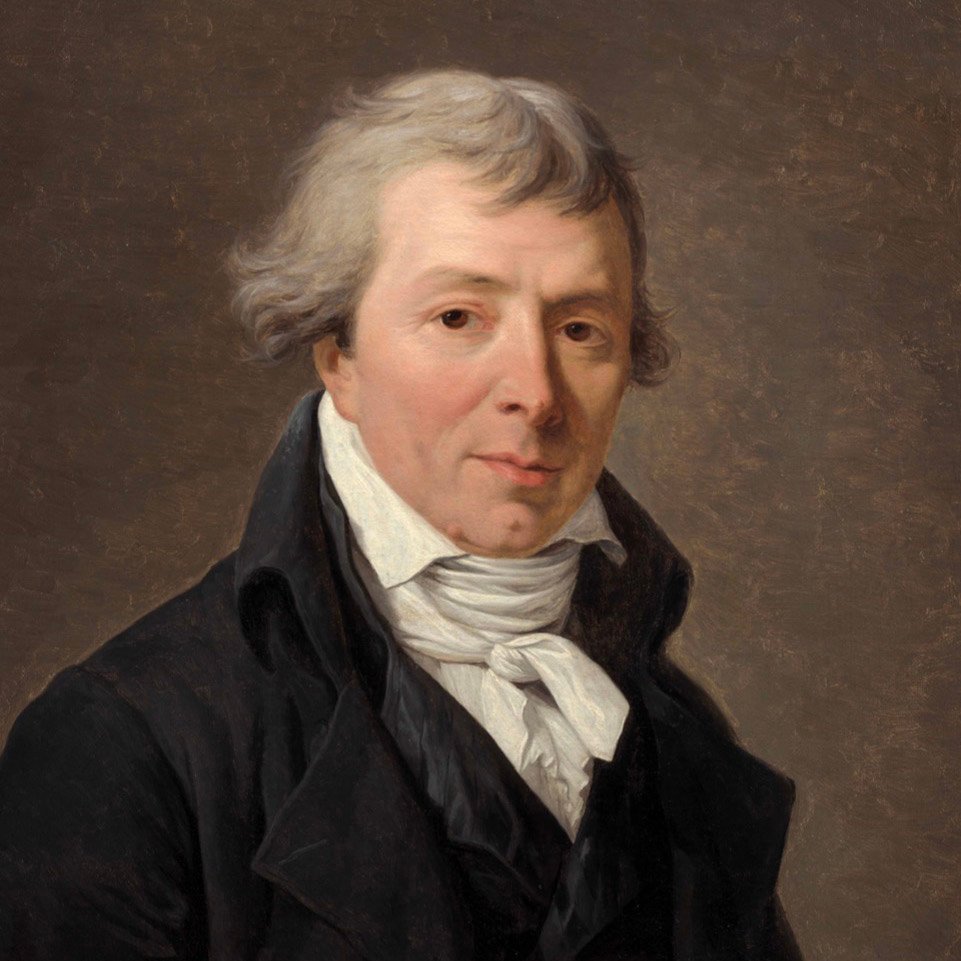
Antide Janvier (1751-1835) is counted among the most brilliant watchmakers who worked during the reign of Louis XVI. Renowned for his astronomical clocks of remarkable complexity, he left his mark on French watchmaking through his technical mastery and scientific vision. His career exemplifies French watchmaking excellence at a time when Paris rivaled London and Geneva.
An Early Talent in Watchmaking
Born in Saint-Claude in the Jura region, Antide Janvier displayed exceptional aptitudes for mechanics and astronomy from a very young age. At just 15 years old, he designed and built a mechanical sphere representing the movements of the planets, demonstrating an intuitive understanding of complex mechanisms. This early technical prowess quickly earned him the attention of the scientific circles of the time.
Royal Patronage and Prestigious Commissions
Arriving in Paris in 1773, Janvier presented his creations to the Academy of Sciences, which immediately recognized his exceptional talent. His growing reputation attracted the attention of Louis XVI, a passionate enthusiast of science and mechanics. The king, as he would later do with Breguet, extended his patronage to him and placed several prestigious commissions. This royal recognition allowed Janvier to establish his workshop in Paris and to develop increasingly ambitious pieces.
Astronomical Clocks, Technical Masterpieces
Antide Janvier’s specialty lay in the design of astronomical clocks of unparalleled precision and complexity. His creations did not merely tell time, but accurately reproduced celestial movements. Among his most remarkable achievements is the “Grande Pendule Astronomique” presented to Louis XVI in 1789, capable of reproducing the movements of the solar system with astonishing precision for the era.
Technical Innovation in the Service of Astronomy
Unlike his contemporaries such as Ferdinand Berthoud or Jean-Antoine Lépine, who excelled in pocket watches, Janvier primarily dedicated himself to monumental clocks. He developed innovative mechanisms allowing for the simultaneous representation of several astronomical cycles, such as lunar phases, equinoxes, and eclipses. His equation clocks incorporated mechanisms capable of displaying both mean solar time and true solar time.
Difficulties During the French Revolution
The French Revolution marked a difficult turning point in Janvier’s career. His proximity to the royal court became a disadvantage after 1789. Unlike Abraham-Louis Breguet, who managed to temporarily exile himself to Switzerland, Janvier remained in France and experienced significant financial difficulties. His creations, symbols of aristocratic luxury, found fewer buyers in this troubled political context.
The Technical and Scientific Legacy
Despite these setbacks, Antide Janvier’s work remains an exceptional testament to French watchmaking genius. His creations, preserved today in major museums such as the Musée des Arts et Métiers in Paris or the British Museum in London, illustrate the perfect alliance between astronomical science and technical excellence. His treatise “Des révolutions des corps célestes par le mécanisme des rouages” (1812) constitutes a major reference in astronomical watchmaking.
A Late Recognition
Although less famous today than his contemporary Breguet, Antide Janvier is considered by specialists as one of the greatest astronomical watchmakers of all time. His scientific approach to watchmaking, his technical mastery, and his ability to translate celestial movements into precise mechanisms make him a major figure in 18th-century French watchmaking, embodying the spirit of the Enlightenment in his art.